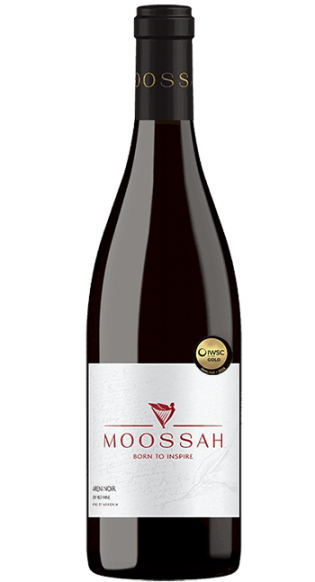

A great Areni Noir food pairing does more than make dinner taste better. It reveals why this ancient Armenian grape has earned a place beside the world’s most expressive reds. With its bright red-fruit character, lively acidity, savory spice, and fine tannins, Areni Noir brings lift to a table without disappearing beside richly seasoned food.
For wine drinkers accustomed to Pinot Noir, Sangiovese, or lighter Northern Rhône reds, Areni Noir offers a compelling new reference point. It can be delicate in texture yet deeply rooted in place, carrying the high-altitude freshness and stony energy of Armenia’s vineyards. That balance makes it remarkably versatile at the table – particularly with grilled meats, herbs, smoke, roasted vegetables, and the generous flavors of Armenian cuisine.
Why Areni Noir Works So Well With Food
Areni Noir is not a heavy red built to overwhelm a dish. Its strength is precision. Depending on the vintage and winemaking style, expect aromas and flavors that may suggest sour cherry, raspberry, pomegranate, rose petal, black pepper, dried herbs, and a subtle earthy note. The palate often feels fresh rather than dense, with tannins that frame the fruit instead of coating the mouth.
This profile gives the wine three important advantages at dinner. Its acidity cuts through fat, its red-fruit brightness refreshes the palate, and its savory side connects naturally with char, spice, and herbs. A lean, simply grilled lamb chop may be as successful a match as a slow-cooked eggplant dish, provided the seasoning has enough character to meet the wine.
The main trade-off is richness. An elegant Areni Noir can be lost beside a sweet barbecue sauce, an aggressively spicy chili dish, or a steak covered in heavy cream sauce. When the food is very powerful, choose a more structured, oak-aged expression of the grape or let the dish lean into savory, smoky, and herbal flavors rather than sweetness.
Areni Noir Food Pairing With Armenian Classics
Armenian cooking was shaped by mountains, gardens, open-fire grilling, preserved ingredients, fragrant herbs, and hospitality. Areni Noir feels at home here because it speaks the same language: bright fruit beside smoke, freshness beside richness, and depth without excess.
Grilled lamb and khorovats
Charcoal-grilled lamb is one of the most natural partners for Areni Noir. The wine’s acidity lifts the lamb’s richness, while its peppery and earthy notes echo the smoke from the grill. A marinade of onion, garlic, black pepper, and herbs creates an especially harmonious bridge.
Khorovats, Armenia’s beloved style of barbecue, works beautifully when the plate includes grilled peppers, tomatoes, eggplant, and lavash. The vegetables bring sweetness and char, while the wine keeps the meal focused and energetic. For a more substantial cut, such as lamb shoulder or lamb kebabs, a barrel-aged Areni Noir can offer the extra structure needed for the pairing.
Dolma, stuffed vegetables, and herbs
Dolma shows Areni Noir’s more subtle side. Whether grape leaves are filled with beef and rice or vegetables are stuffed with a fragrant herb-and-grain mixture, the dish carries savory layers without the blunt richness of a roast. Areni Noir meets those layers with freshness, especially when mint, dill, parsley, or warm spices are present.
Tomato-based stuffed peppers and eggplant are also excellent choices. The wine’s tart cherry and pomegranate notes can complement tomato’s natural acidity, while its fine tannins are gentle enough for vegetables. If the dish is vegetarian and especially herb-forward, serve the wine slightly cooler to emphasize its brightness.
Manti and savory pastries
Manti, the small Armenian dumplings often served with yogurt, butter, or tomato-based sauces, can be a wonderful pairing when the filling is lamb or beef. The key is moderation: a bright tomato sauce or browned butter with dried mint creates a more successful match than a very creamy, garlic-heavy yogurt sauce.
Areni Noir also complements flaky meat-filled pastries, especially those seasoned with onion, cumin, or pepper. The wine’s acidity clears the palate between bites, preventing pastry and meat from feeling too heavy. This is the kind of pairing that makes a shared dinner linger long after the plates are cleared.
Beyond Armenia: What to Serve With Areni Noir
Areni Noir belongs on more than an Armenian table. Its graceful structure makes it a versatile companion for American home cooking and restaurant menus alike.
Duck breast with cherry, plum, or pomegranate is an exceptional match. The fruit in the sauce mirrors the wine without making the pairing feel sweet, while duck’s richness is tempered by Areni Noir’s natural freshness. Pork tenderloin with roasted cherries, grilled salmon with a smoky glaze, or turkey with cranberry and herbs can also work beautifully.
For a meatless meal, think in terms of fire and earth. Grilled portobello mushrooms, lentils with caramelized onions, roasted beets, ratatouille, and eggplant Parmesan all bring savory depth that welcomes the wine’s red fruit and spice. A mushroom risotto can work as well, though it is best when made with restrained cream and a little aged cheese rather than an overly rich finish.
Pizza is another easy, rewarding option. Choose mushroom and sausage, roasted vegetable, or prosciutto with arugula rather than a sugary sauce or excessive mozzarella. Areni Noir has enough acidity for tomato and enough fragrance for herbs, but it prefers balance over excess.
Cheese Pairings That Let Areni Noir Speak
With cheese, Areni Noir generally favors savory, nutty, and moderately aged styles over intensely blue or very sweet washed-rind cheeses. Armenian string cheese, especially when served with herbs and lavash, is a natural starting point. So are sheep’s milk cheeses, aged goat cheese, Manchego, Comté, and firm Alpine-style cheeses.
A cheese board becomes more compelling when it includes fruit with tartness rather than syrupy sweetness. Fresh cherries, pomegranate seeds, blackberries, and dried apricots can all work, as can toasted walnuts and lightly cured meats. Keep honey and jam restrained. Too much sweetness can make a dry red wine seem sharper and more austere than it truly is.
Serving Temperature Changes the Pairing
The way you serve Areni Noir can determine whether it feels poised and vivid or muted and overly warm. Aim for about 58 to 62°F. That is cooler than many people serve red wine, but it allows the grape’s floral aromatics, bright fruit, and mineral tension to emerge.
If the bottle has been stored at room temperature, place it in the refrigerator for 20 to 30 minutes before opening. If it has been chilled too long, let it rest on the table for a few minutes. A brief decant can help a younger or more structured bottling open up, but there is no need to treat every bottle as though it requires hours of preparation.
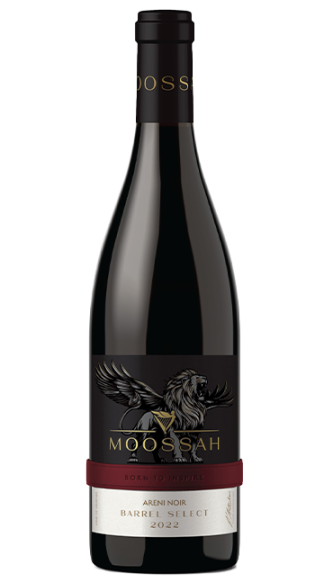
For a more delicate Areni Noir, pair with lighter cuts, roasted vegetables, and dishes that feature herbs or tangy sauces. For a fuller, oak-matured bottling, such as Moossah’s limited Barrel Select red, bring in lamb shoulder, grilled steak, smoked mushrooms, or aged cheese. The wine should meet the weight of the dish, not compete with it.
A Simple Way to Build Your Menu
Start with one shared flavor rather than trying to match every ingredient. Char from the grill, pomegranate’s tartness, fresh herbs, black pepper, or roasted eggplant can each form a bridge between glass and plate. Then let Areni Noir provide the contrast: freshness against fat, fruit against smoke, and fine tannin against savory richness.
That is the pleasure of serving this Armenian red. It invites familiar foods into a different landscape, where a weeknight roast chicken, a board of cheese and lavash, or lamb cooked over coals can carry the memory and creative spirit of Armenia to the table.